The Hard Market Evolves: Navigating geoeconomic fragmentation and yield resilience in 2026

The global insurance landscape has transitioned beyond the "hard market" plateau; it has entered a sophisticated phase of evolution defined by geopolitical and economic shifts. As the sector targets a robust projected 17% Return on Equity (ROE) for 2026, the foundational calculus of pricing is undergoing a radical change. We are no longer merely calculating for consumer price index (CPI) and wage inflation; we are now comprehensively pricing for systemic risk stemming from increasing geoeconomic fragmentation.
A Pivot Point in Global Macroeconomics
The convergence of findings from the latest IAIS Global Insurance Market Report (GIMAR) and the IMF’s World Economic Outlook underscores a critical pivot point for the industry. While projections indicate a stabilizing global growth rate near 3.2%, this headline figure masks deep underlying volatility. The enduring K-shaped recovery continues to widen disparities in regional and sectoral performance, while severely divergent monetary policy paths across major central banks, particularly the U.S. Federal Reserve, the European Central Bank (ECB), and the Bank of Japan (BoJ), are creating unprecedented challenges for asset-liability management (ALM). This environment forces insurers to grapple with fluctuating currency bases, asynchronous inflation cycles, and heightened capital mobility risks.
The Full Force of Regulatory and Systemic Risk Assessment
For 2026, the IAIS Holistic Framework for the mitigation of systemic risk is fully operational, introducing a new echelon of rigorous oversight and capital assessment. This framework demands a proactive approach to identifying, measuring, and managing interconnected risks across the global financial system.
In response to this tighter regulatory environment and the persistent hunt for yield in a moderating interest rate cycle, a significant shift is observable within life and annuity portfolios. Insurers are rapidly increasing their allocations to private credit, with growth rates hitting double-digits. This strategic pivot is driven by the necessity to capture the illiquidity premium inherent in private debt to offset the decline in primary corporate and government bond yields. This move requires enhanced due diligence, robust modeling of complex credit structures, and sophisticated governance to manage the inherent complexities and longer lock-up periods of these assets.
The New Mandate for Profitability: Precision and Agility
For executive leadership, the profitability narrative for 2026 is distinctly different from the post-pandemic recovery phase. Success will not be measured by simple top-line premium growth, which is slowing; instead, it hinges on two core competencies: yield resilience and underwriting precision.
The period of "easy gains", the automatic profitability driven by aggressive rate increases in the immediate aftermath of market hardening, has largely been exhausted. Moving forward, competitive advantage belongs to those firms capable of decoupling their financial performance from broader macro-volatility.
This decoupling requires fundamental excellence across the value chain, specifically through:
Superior Data Governance: Moving beyond simple data aggregation to truly leverage advanced analytics, AI, and granular proprietary data to gain a predictive edge in risk selection and capital deployment. This includes optimizing reinsurance structures and accurately assessing emerging perils like cyber risk and climate-related secondary perils.
Capital Agility: The ability to rapidly reallocate capital across geographies and product lines in response to shifting regulatory constraints, emergent risk zones, and evolving market opportunities. This means maintaining flexible capital structures that can withstand unforeseen shocks while remaining efficient in their deployment.
The winners in 2026 will be defined less by their size and more by their surgical approach to risk acceptance and investment strategy, demonstrating a sophisticated mastery of the complex, fragmented global economic terrain.
Strategic Insight
This convergence shifts the burden from traditional actuarial models to dynamic capital modeling. With Basel III Solvency II divergence creating capital traps in certain jurisdictions, the cost of regulatory friction is now a core line item. Additionally, the rise of Secondary Perils and social inflation means that historical data is becoming a lagging indicator of future solvency.
The 2026 Leadership Playbook
Audit Your ALM for Fragmentation Risk: Stress-test your portfolios against divergent interest rate paths between the Fed, ECB, and BoJ. Don’t assume global correlation.
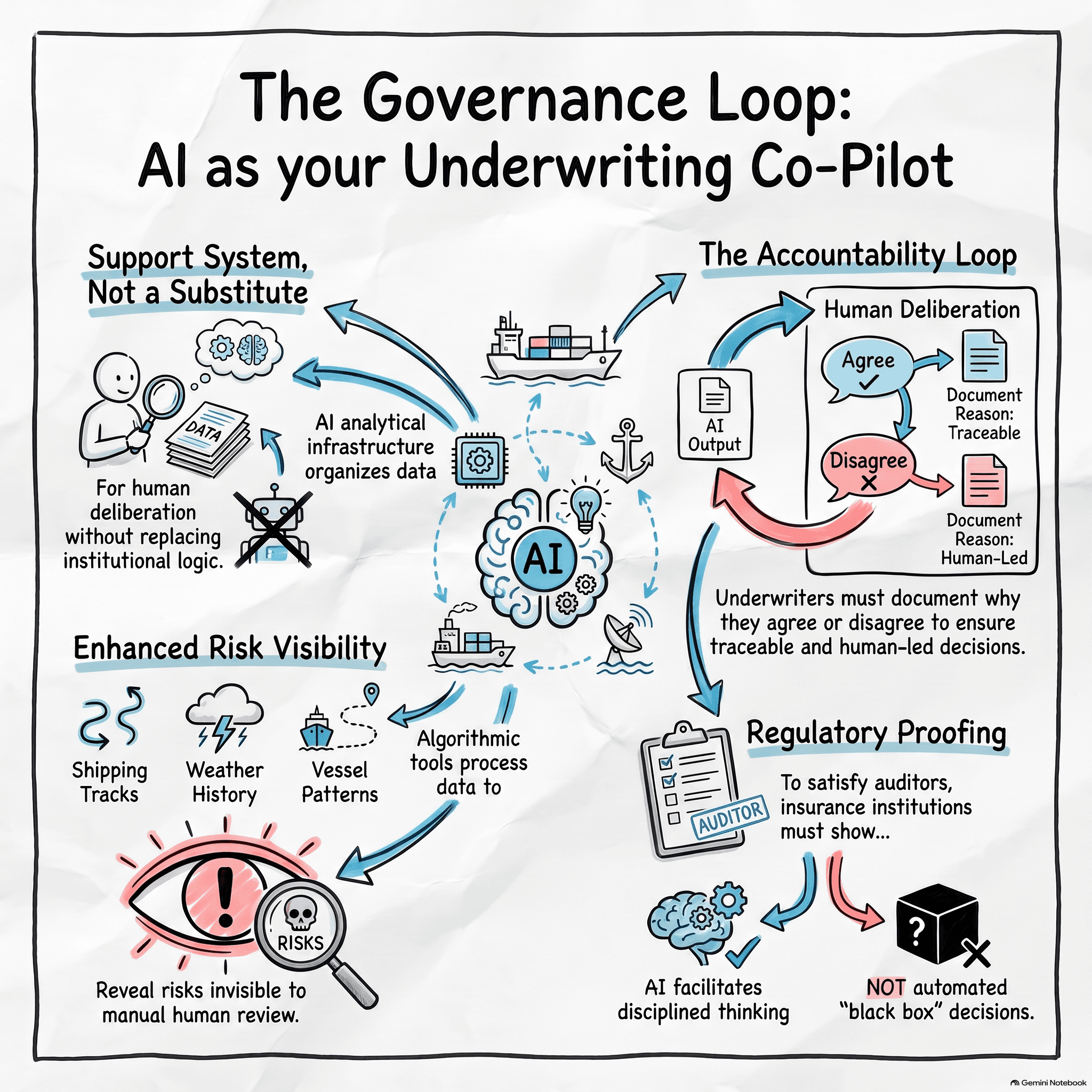
Operationalize AI Governance: Move beyond AI pilots. In line with 2026 IAIS priorities, implement a board-level framework for model transparency and third-party concentration risk.
Optimize Reinsurance Structures: With 1/1 renewals showing increased capacity but technical pricing, shift toward structured partnerships and multi-year capital solutions rather than transactional buying.
Re-evaluate Private Credit Guardrails: Ensure your risk appetite for alternative assets accounts for the current valuation lag and potential liquidity squeezes in mid-market segments.
In 2026, stability is a strategic choice, not a market condition. Navigating this convergence requires moving from a reactive compliance mindset to a proactive capital optimization stance.