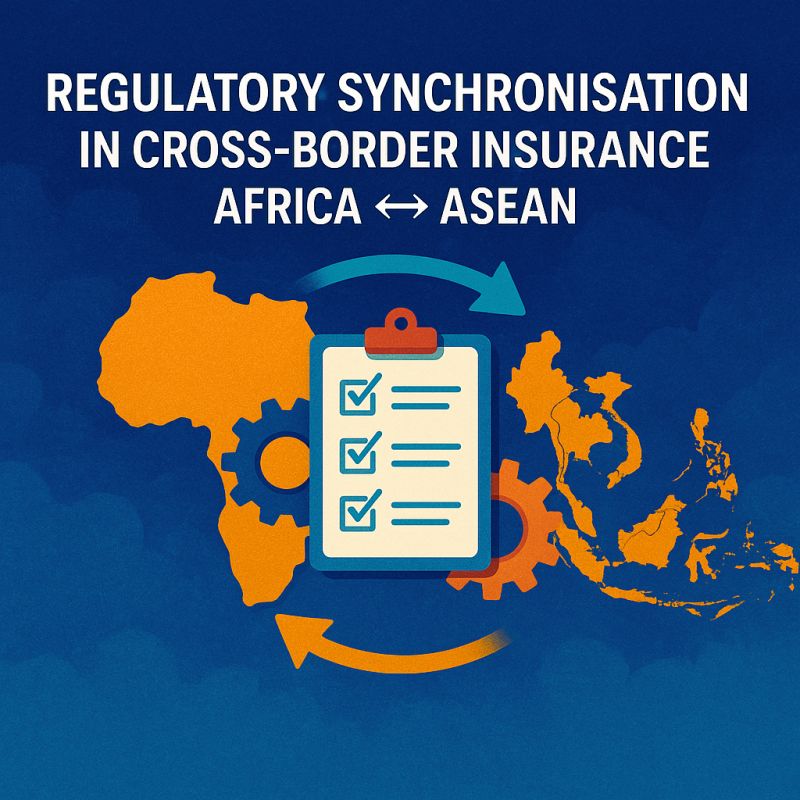
Regulatory synchronization in cross-border insurance (Africa - ASEAN)
Over 70% of cross-border insurance transactions in emerging markets face compliance friction due to mismatched regulatory frameworks (IAIS, 2024).
In an era of globalized risk, fragmented rules, not lack of demand, are slowing Africa-ASEAN insurance expansion. The IMF and IAIS have both highlighted the urgency of regulatory convergence. While ASEAN’s Insurance Integration Framework advances mutual recognition, Africa’s continental efforts (under AfCFTA and the African Risk Capacity) remain uneven. Global brokers and reinsurers are already flagging this lack of synchronization as a top constraint to capital mobility and cross-border policy issuance.
Having worked with insurers navigating both African and Asian markets, I’ve seen how divergent solvency regimes, AML directives, and data-protection laws create hidden costs. One compliance delay in Lagos can ripple through a Singapore risk syndicate within hours. This isn’t a back-office issue, it’s a strategic bottleneck.
Strategic Insight:
Regulatory alignment isn’t just bureaucracy, it’s the backbone of regional growth. When frameworks differ, reinsurers hesitate, premiums rise, and capital efficiency drops.
But when they align, brokers gain agility, regulators build trust, and clients benefit from faster risk transfer. The key shift ahead: from jurisdictional control to supervisory collaboration.
Playbook for Executives
Map your regulatory exposure, identify cross-border bottlenecks between African and ASEAN markets.
Engage proactively with local regulators to advocate for mutual recognition agreements.
Harmonize compliance frameworks internally (KYC, AML, solvency) to anticipate regional adoption.
Build an internal “regtech bridge” to automate multi-jurisdiction reporting.
For global brokers and insurers, regulatory synchronization is not optional, it’s the foundation for scalability, capital flow, and trust in a digitized, cross-border era.