Geoeconomic fragmentation is no longer background noise
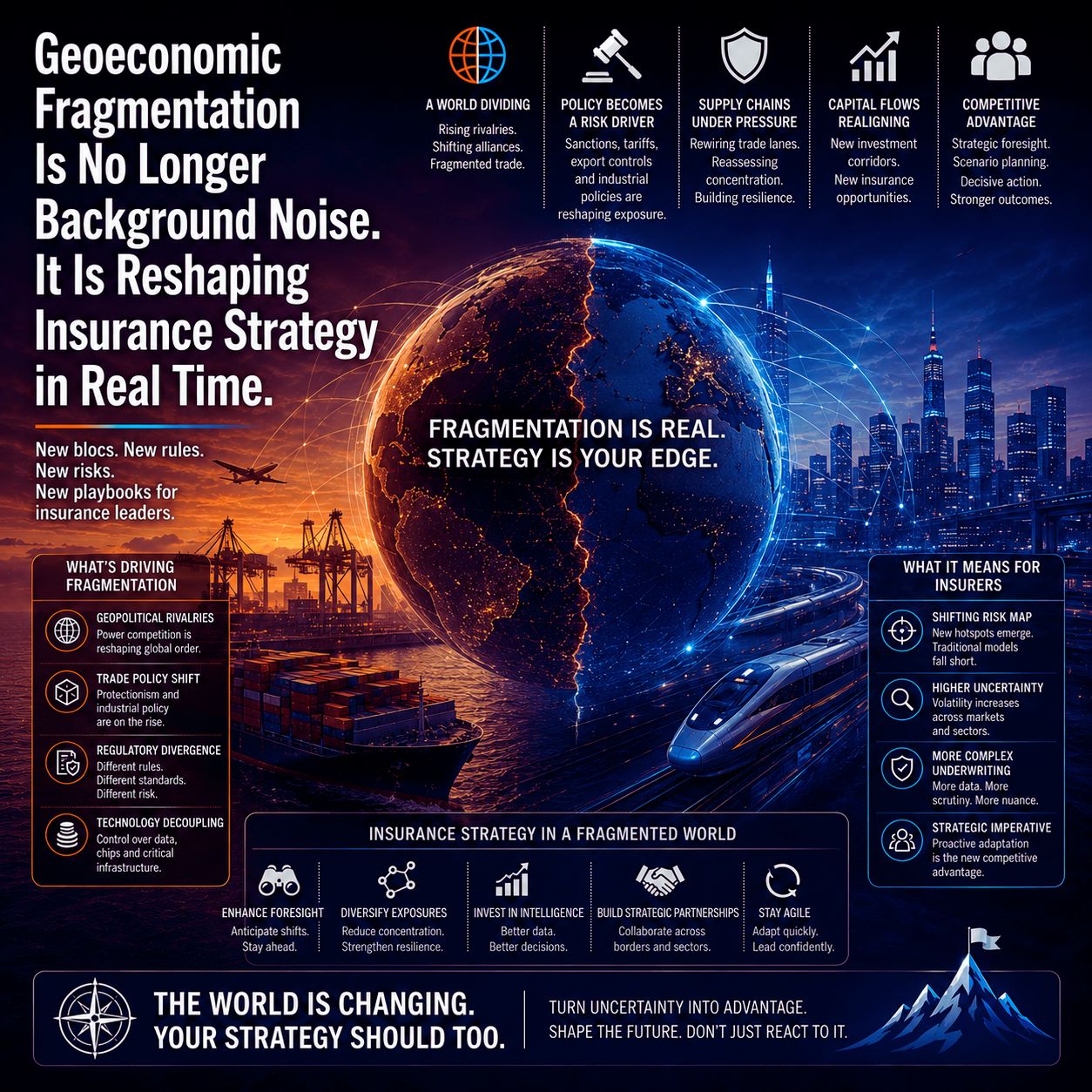
Geoeconomic fragmentation is fundamentally rewriting the insurance industry's strategic playbook. This shift requires moving beyond viewing geopolitical tension as mere "background noise" to recognizing it as a primary driver of risk selection, claims servicing, and capital movement. As global trade becomes more complex—despite record volumes reaching $35 trillion in 2025—the rising fragility of trade corridors necessitates a more robust approach to operational resilience.
Treating these developments as peripheral issues is a significant strategic error. Choosing to ignore these shifts is equivalent to accepting unmitigated operating model risk in an environment where both macroeconomic costs and micro-level operational frictions are steadily increasing. For insurance leadership, the challenge lies in identifying where the most critical organizational gaps exist: in visibility across counterparty chains, in the readiness for claims permissibility, or in the fundamental ability to maintain consistent operations across increasingly divergent regulatory blocs.
Strategic Playbook for Leadership
To address these challenges, CEOs, CFOs, CROs, CCOs, and Managing Directors must implement a coordinated response centered on four key pillars of action:
Build a Comprehensive Fragmentation Risk Map: Organizations must look across their entire portfolio to identify corridors and sectors where sanctions exposure, export controls, and data constraints are most likely to manifest. This map should steer risk appetite and accumulation strategies, ensuring that board-level conversations remain anchored in strategic cost-framing, such as the IMF's warnings on global output losses.
Evolve Onboarding from KYC to Counterparty-Chain Visibility: Standard Know Your Customer (KYC) protocols are no longer sufficient. Underwriters and claims handlers must operationalize FATF typologies to identify "red flags" such as beneficial ownership opacity, unusual payment patterns via virtual assets, and exploitation within maritime sectors. Visibility must extend to every entity that touches a claim, from the adjuster to the final payment rail.
Establish a "Claims Permissibility" Fast Lane: To prevent loss leakage caused by settlement delays, legal and compliance teams must work alongside claims departments to pre-define procedures for cases involving constrained servicing or payments. This ensures that decisions are both defensible and rapid when counterparty chains become obscured.
Standardize Globally While Localizing Deliberately: While regulatory divergence may force customization, uncontrolled variations increase costs and operational risk. Leadership must use controlled templates and clear change management processes to maintain organizational integrity while adapting to the unique requirements of different economic blocs.